Albert N. Wilmarth
The Colour Out of SpaceAlbert N. Wilmarth, an instructor of literature at Miskatonic University and an enthusiastic student of New England folklore, is the skeptical scholar through whose account the Vermont reports become a personal ordeal. He begins by treating the strange flood sightings as superstition shaped by old legends; correspondence with Henry Wentworth Akeley draws him toward direct investigation, and his flight from Akeley’s farmhouse leaves him with an inference he cannot verify. His importance lies partly in that unresolved gap between trained explanation and experience: even at the end, he refuses to claim certainty about what happened.
Identity and Scholarly Outlook
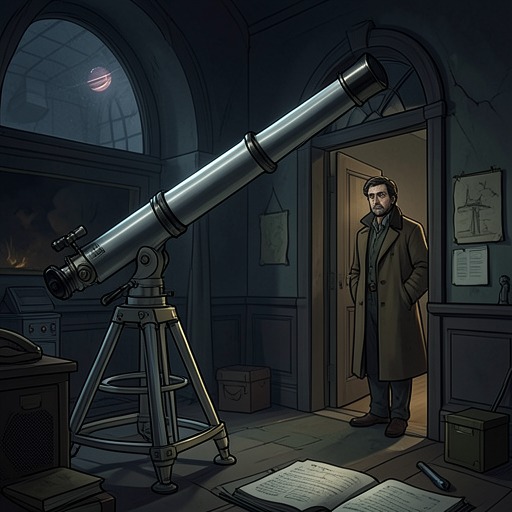
At the time of the November 3, 1927, Vermont floods, Wilmarth teaches literature at Miskatonic University in Arkham, Massachusetts, and pursues New England folklore as an amateur scholar. He is accustomed to interpreting stories through their cultural history. When friends ask him to explain reports of strange objects in the floodwaters, he is flattered by their interest and tries to calm the discussion, regarding the accounts as an outgrowth of rustic superstition rather than evidence of unknown beings.
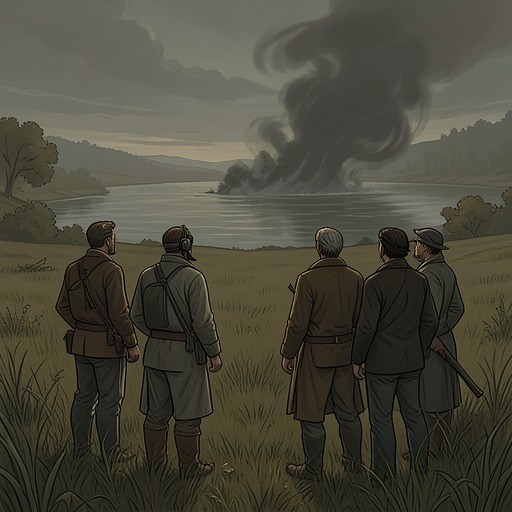
The reports reach him mainly through newspaper clippings, with one account relayed orally in a letter from a Vermont mother to a friend. He sorts the stories into three apparent incidents: one associated with the Winooski River near Montpelier, another with the West River in Windham County beyond Newfane, and a third with the Passumpsic River above Lyndonville. Witnesses describe pinkish, roughly five-foot-long bodies with crustaceous forms, great dorsal fins or membranous wings, articulated limbs, and a convoluted, antenna-covered shape in place of a head. Wilmarth argues that frightened observers had seen human bodies or farm animals in the swollen currents and that inherited folklore had transformed them in memory. The striking similarity among accounts troubles that explanation, but he believes shared legend can account for it.
Folklore and Public Dispute
Wilmarth’s skepticism rests on substantial familiarity with the region’s traditions. He has studied Eli Davenport’s rare monograph, based on oral material collected before 1839, and heard related stories from elderly people in the mountains of New Hampshire. Those traditions tell of a hidden race in remote hills and gorges, leaving claw-like tracks, circles of stones, and caves obstructed by boulders. Some accounts describe huge, light-red, many-legged creatures with bat-like wings; others tell of them carrying objects, moving in disciplined groups, or flying away from a hill beneath the moon. Wilmarth knows that the legends also connect the beings with disappearances, abandoned or burned farmhouses, and places people avoid without always remembering why.
He understands the stories as a body of folklore that changed over time. Earlier accounts tend to portray the beings as harming trespassers who approached their secluded territory; later ones add claw-prints near farmhouses, disappearances outside supposedly haunted districts, buzzing voices imitating human speech, and reclusive people suspected of having allied themselves with the creatures. Different communities supply different explanations, from devils’ familiars to malign fairies. Pennacook myths, in particular, describe the Winged Ones as coming from the Great Bear to mine earthly hills for a stone unavailable on other worlds, then returning to the stars with their cargo. For Wilmarth, the stories’ varied forms are evidence of how communities explain the unknown, not proof that the beings exist.
He takes this interpretation into public debate. Akeley later writes to him after reading a reprint in the Brattleboro Reformer of Wilmarth’s letter about the flood stories and their relation to folklore; the controversy has also appeared in the Rutland Herald. Wilmarth has argued that similarities between Vermont legends and traditions elsewhere reflect common patterns of human imagination. His opponents counter that the persistence and consistency of the local stories, together with the relative inaccessibility of the hills, leave room for an older surviving race. The disagreement exposes the limit of Wilmarth’s method: an explanation based on recurring folklore can make a report intelligible, but it cannot establish what may inhabit unexplored country.
Correspondence and the Journey to Vermont
The exchange with Akeley brings that abstract dispute close to Wilmarth. Akeley’s letter identifies him by name and Arkham address, and a later message sent in direct response to Wilmarth’s own communication removes his lingering doubts about who wrote the puzzling correspondence. Wilmarth feels marked relief, greater than he can account for at the time, and spends the next two days preparing. The correspondence has become more than an intellectual exchange, even though his doubts remain partly unacknowledged.
On the agreed Wednesday, he travels without telling anyone where he is going. His valise contains basic necessities and scientific materials, including the phonograph record, Kodak prints, and Akeley’s complete file of correspondence. The record and images make the journey a test of materials as well as testimony: Wilmarth is carrying objects he can examine, not relying solely on the stories that first drew his attention. He changes trains in Boston and continues west, conscious of moving from familiar regions into a New England he has previously known mainly through reading.
The northbound connection is held when his train reaches Greenfield seven minutes late. As the cars carry him onward, the landscape reinforces his sense of entering an older, less modernized region. He sees the Connecticut River and, after crossing it, the green Vermont hills. When the conductor tells him to set his watch back an hour, Wilmarth experiences the adjustment as if he were also turning the calendar back a century. The journey thus turns his earlier interest in inherited memory into a passage through a landscape he has never visited.
Wilmarth’s writings continue to bring him reports from beyond Vermont. In another correspondence, a writer refers to his articles in the Journal of the American Psychological Society and to his descriptions of old cities and unusual designs. After seeing photographs of carved stones found in the Great Sandy Desert, Dr. Boyle recognizes similarities to material described in Wilmarth’s work and urges that the discovery matters. The episode shows his scholarship functioning as a point of contact: claims and observations from distant places are sent to him for comparison with legends he has published about.
The Farmhouse and the Unresolved Ending
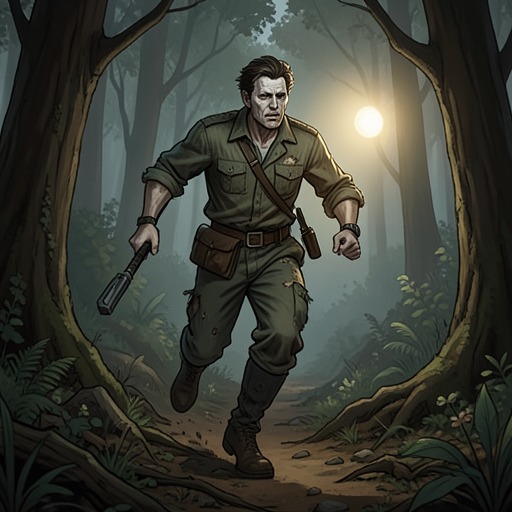
Wilmarth’s visit to Henry Wentworth Akeley’s farmhouse culminates in a night flight through Vermont’s hills in a commandeered motor. He later insists that no actual visual horror was before him at the end. What sent him racing away was an inference formed from the things he had seen and heard and from the information and speculations he had shared with Akeley. He acknowledges how vivid their effect was, but cannot prove that his interpretation was right.
The aftermath supplies no decisive confirmation. Akeley disappears, yet people find nothing amiss in the house despite bullet-marks on both its exterior and interior. There is no sign that a guest had been there or that the cylinders and machines once kept in the study had been stored there at all. The house appears as though Akeley simply went out for a walk in the hills and did not return. His fear of the surrounding landscape and his strange behavior could, Wilmarth concedes, be explained as eccentricity; neither establishes what happened.
Narrative Role and Significance
Wilmarth’s account is shaped by a sustained conflict between evidence and interpretation. The scholar who initially explains the flood reports through folklore later confronts evidence he finds compelling, but he does not convert conviction into certainty. His method remains visible in the ending: he distinguishes what he experienced from what he inferred, and what he inferred from what can be proved. Akeley’s disappearance does not resolve the mystery; the empty-seeming farmhouse and missing machinery instead sharpen the distance between Wilmarth’s account and any independently verifiable explanation.
That restraint makes Wilmarth more than a guide from skepticism to belief. His scholarship gives the old stories historical texture, while his personal involvement tests whether such context can contain the events it helps him recognize. He ends neither with a secure debunking nor with proof of the supernatural, but with an account that preserves both the force of his fear and the possibility that he misunderstood it.